

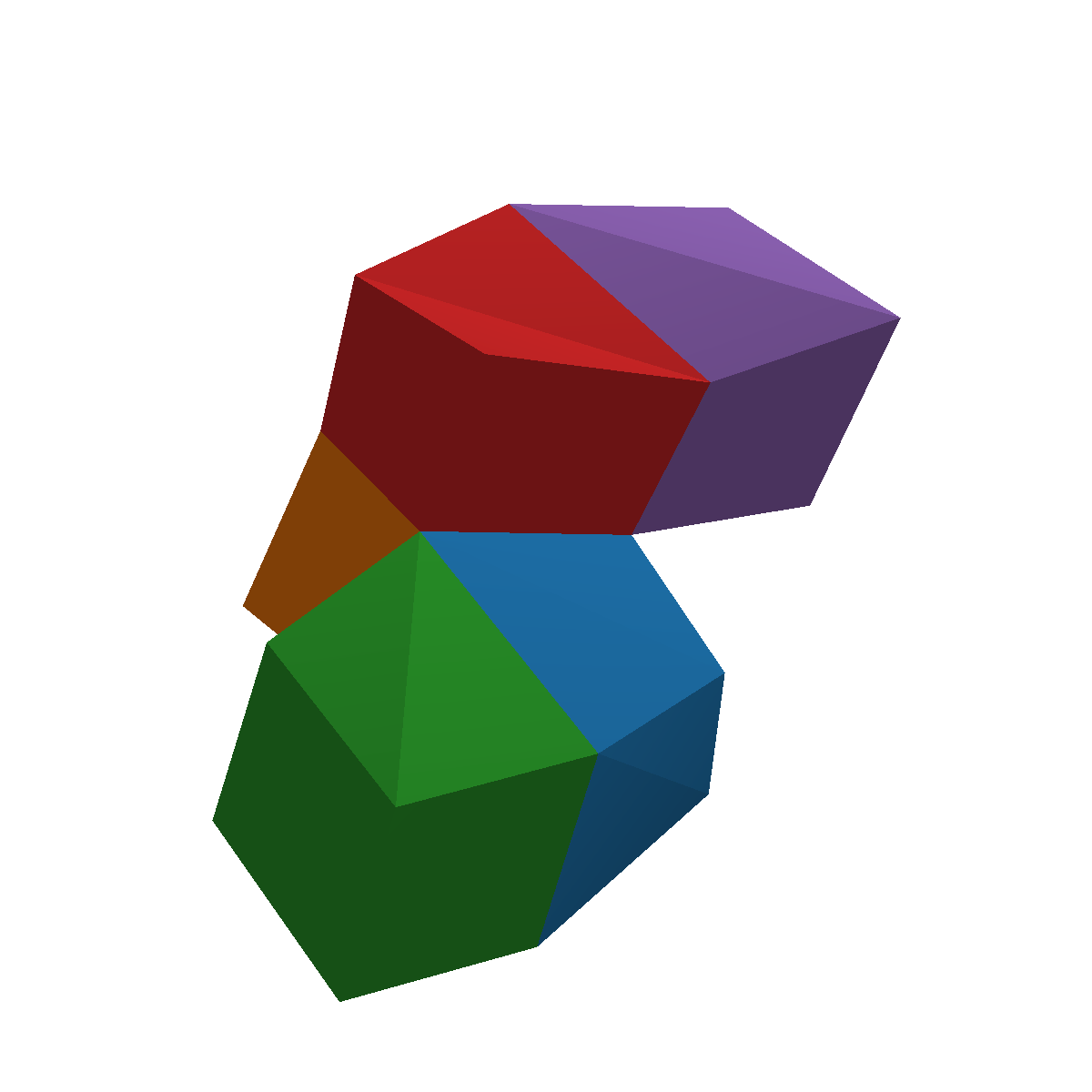

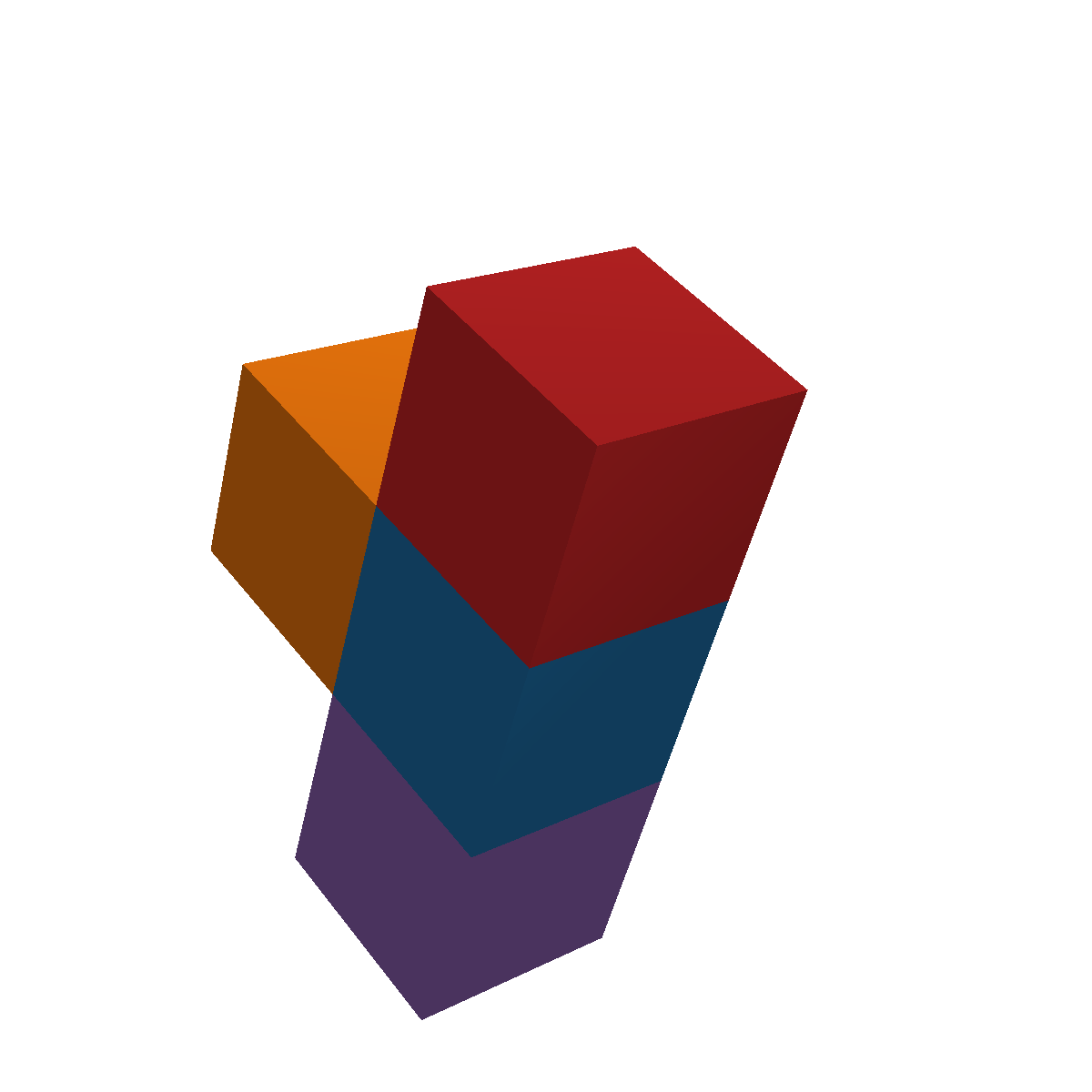
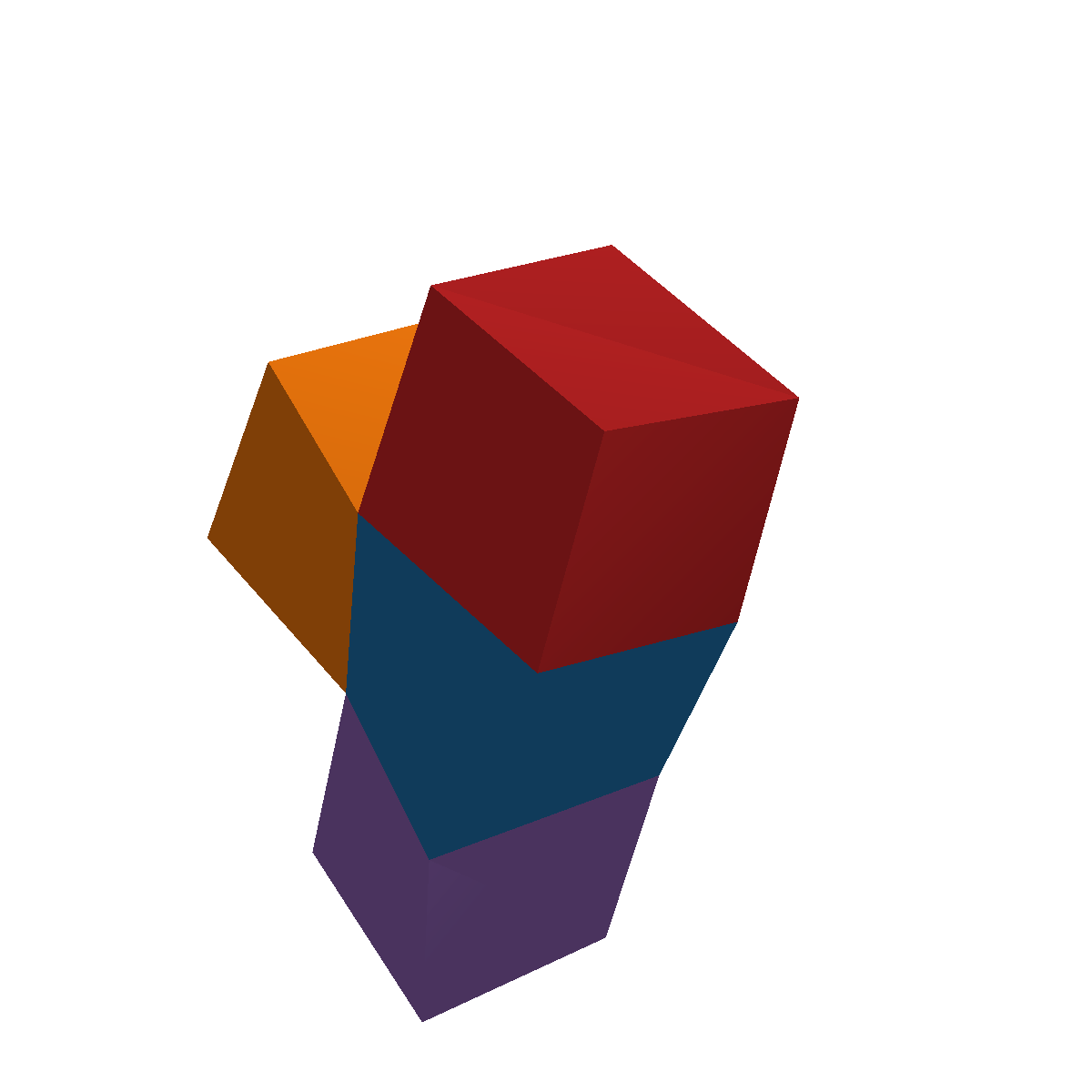
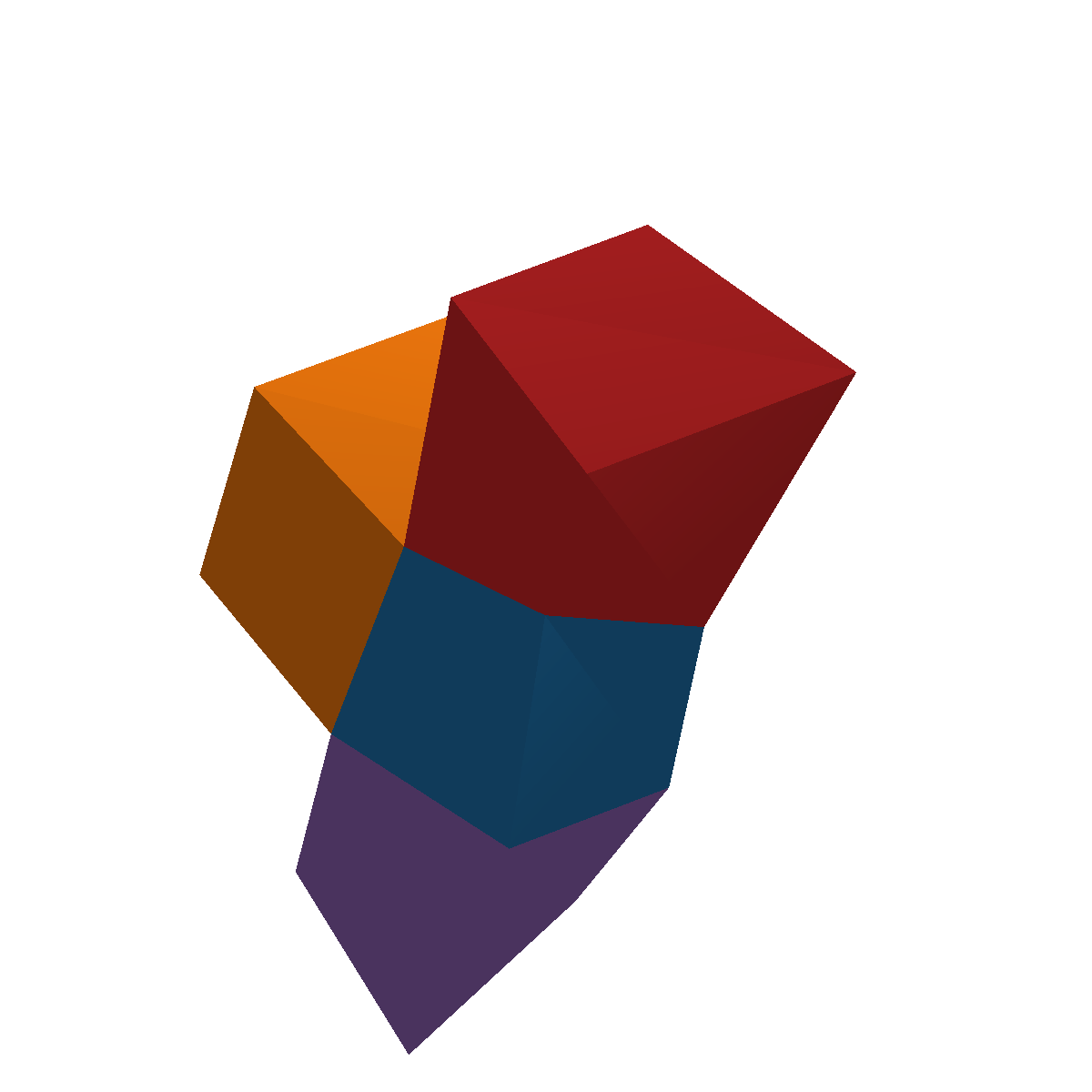
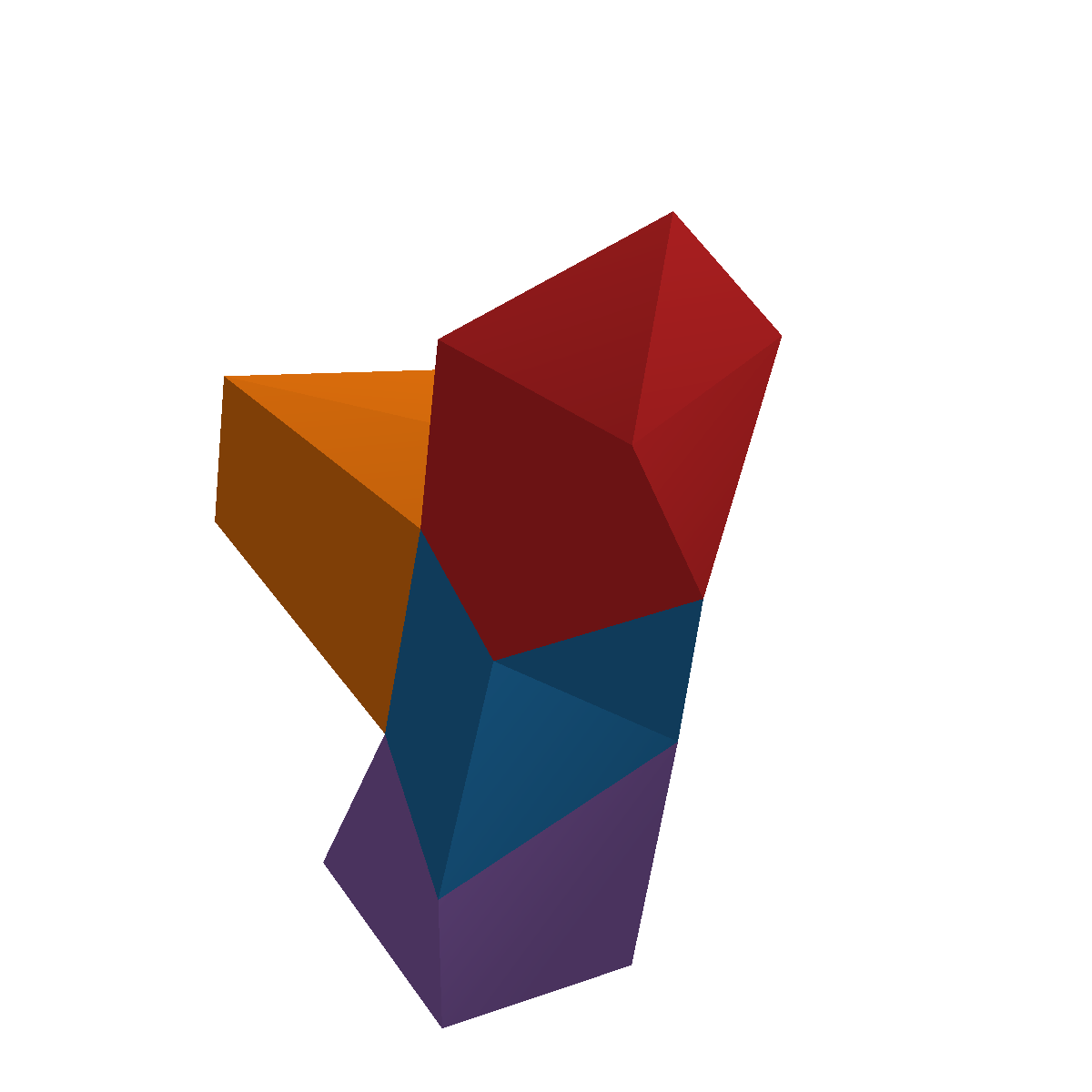
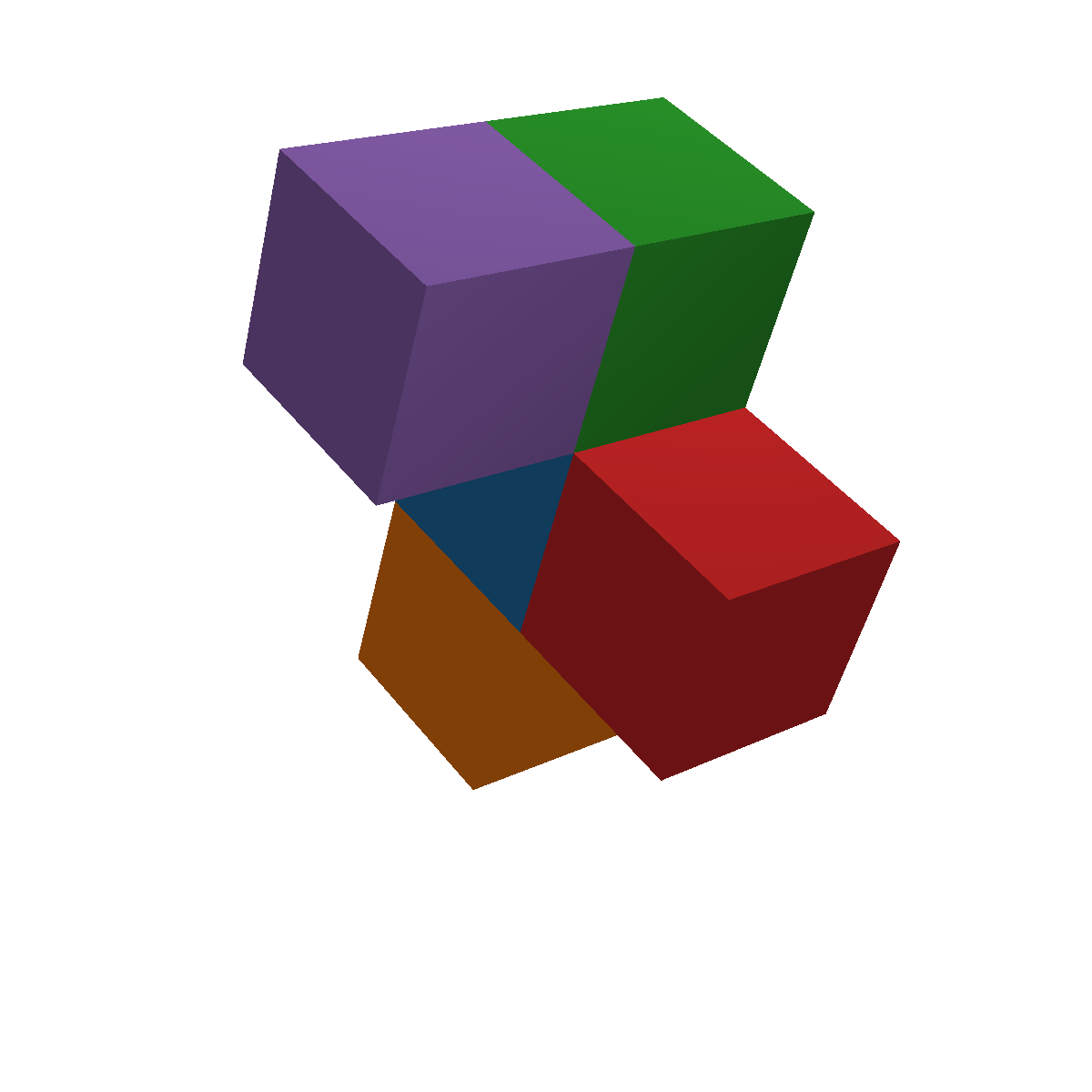
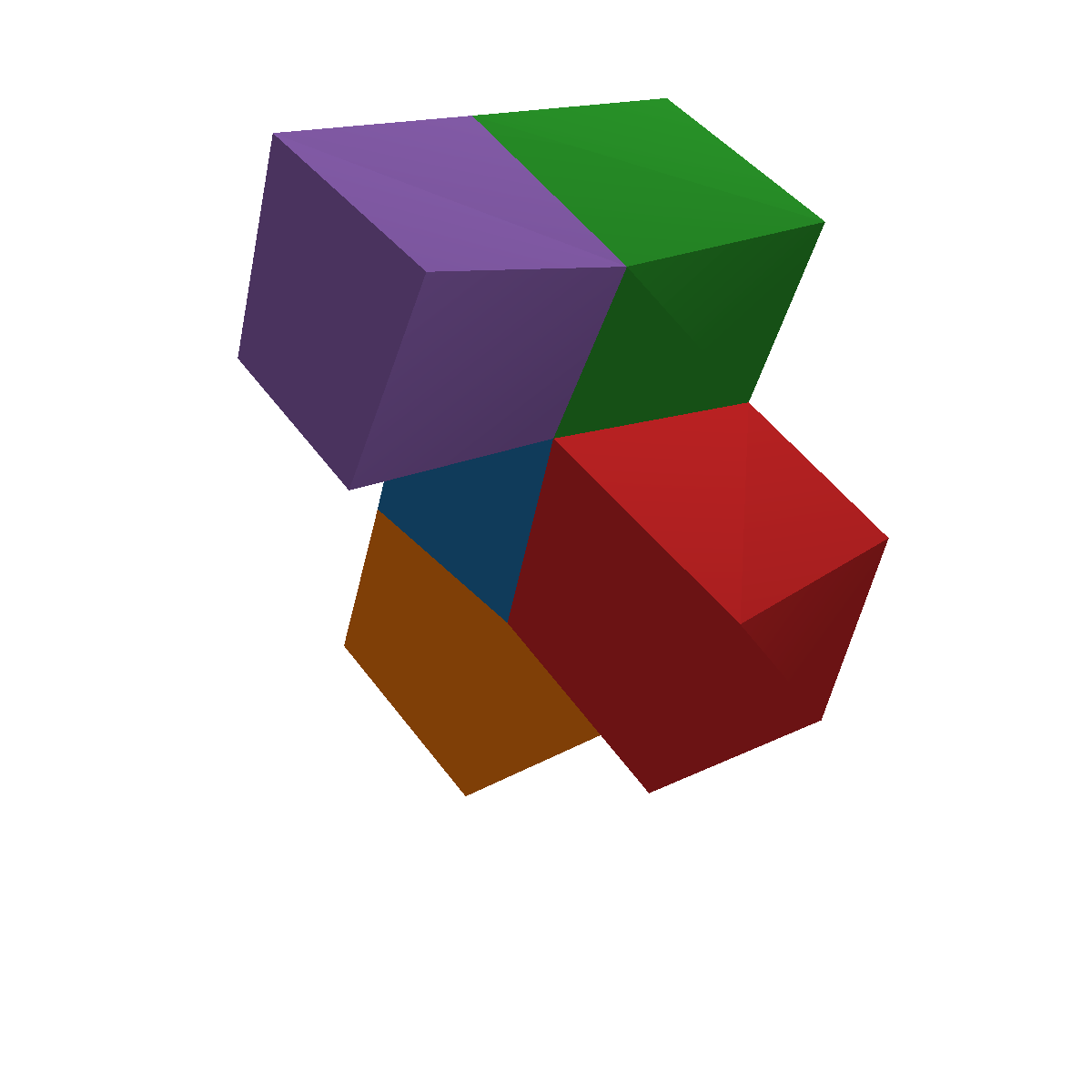
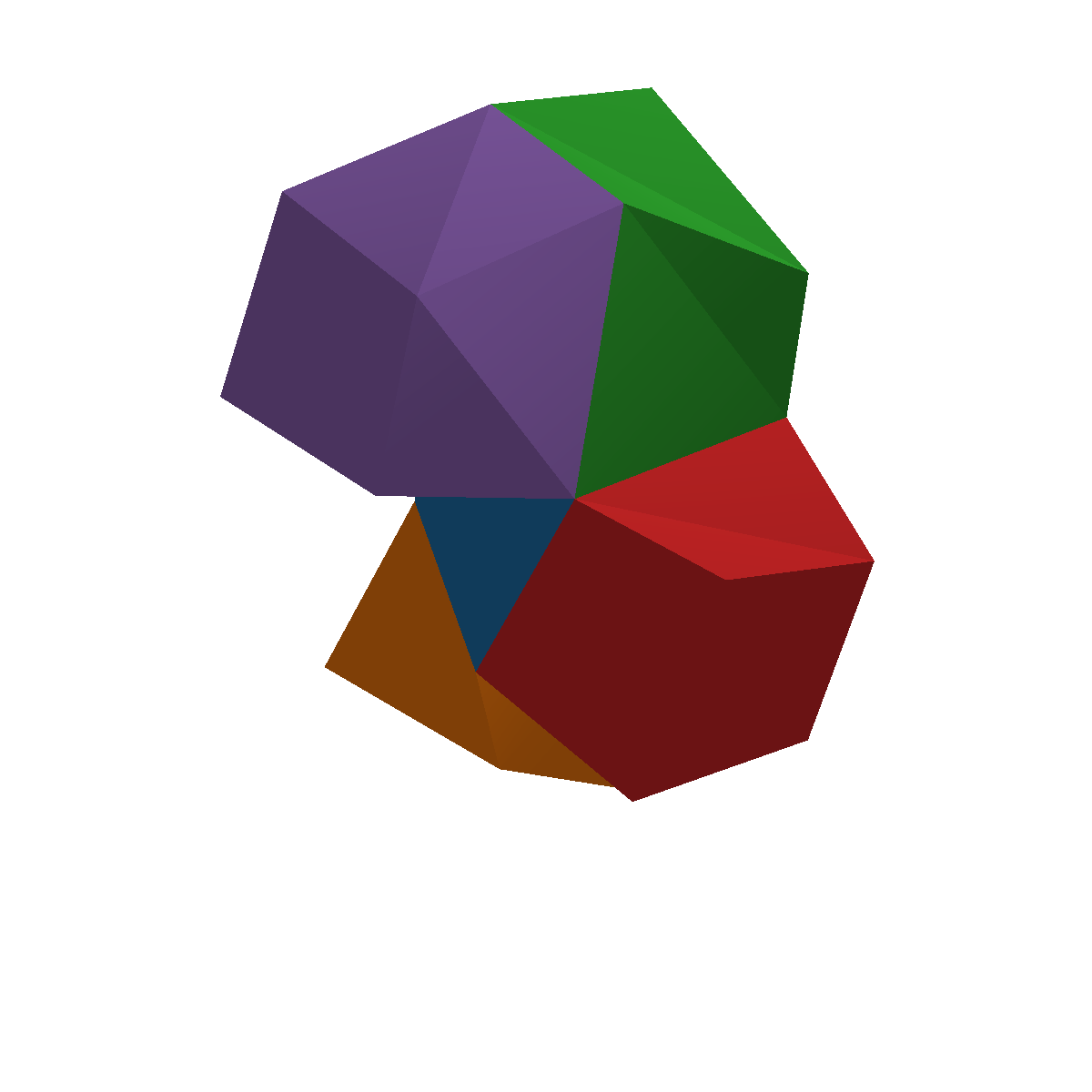
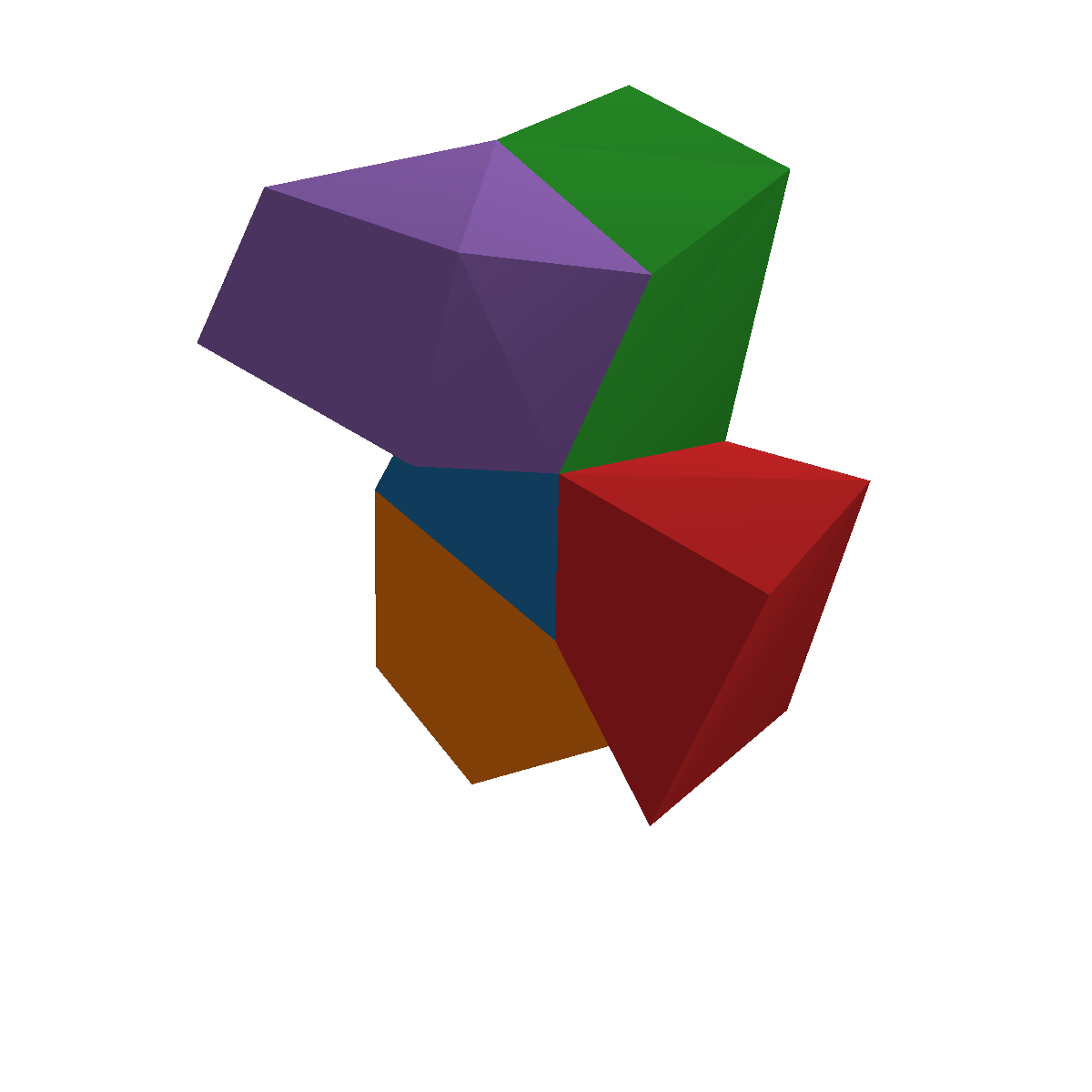
This research introduces a family of random 3D shapes, based on polycube constructions. Polycubes are face-connected assemblies of identical cubes, which can generate a wide variety of shapes, including those with concavities and holes. The resulting mesh and point cloud models are potentially useful for robotic grasping research, and related fields.
A statistical shape generation algorithm is proposed, which can preferentially generate flatter or more elongated configurations. It is also shown that the local surface geometry can be varied, by random perturbation of the mesh vertices, while preventing self-intersections. This constraint allows analytic expressions to be obtained for the volume, surface area, and inertia tensor, in all cases. An efficient implementation is provided, as a Julia package.
The figure below shows three sample polycubes (rows) of order five. Each shape is randomly deformed, by four increasing amounts (columns):